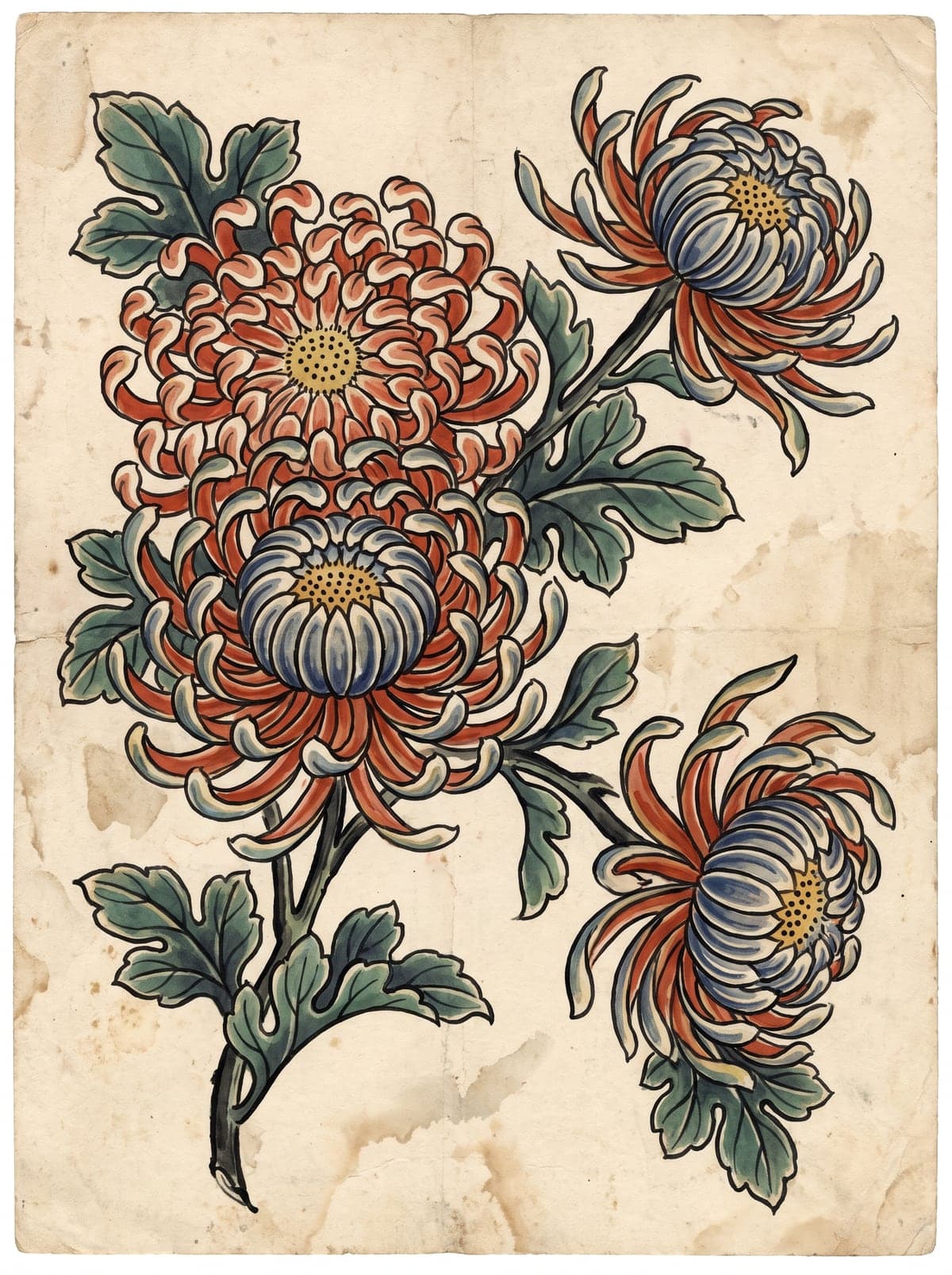
Chrysanthemum (Kiku) — original Inkeify art plate in the ukiyo-e tradition.
Meaning & Symbolism
Longevity, perfection, rejuvenation, the Emperor. The Imperial Seal of Japan is a stylized chrysanthemum with sixteen petals. Associated with the autumnal festival of Chōyō (Double Ninth).
The Story
The chrysanthemum was imported from China where it was believed to have the power of life. Drinking dew from chrysanthemum petals was said to grant longevity. The 16-petal chrysanthemum has been the Imperial Family's crest since the Kamakura period.
How Artists Render It
The kiku renders as a radial burst — dozens of thin petals from a tight centre, essentially a sun disk in flower form (it is the imperial crest for exactly that reason). Treatments run gold, orange, red or white with each petal individually shaded; the radial rhythm is the piece. In black-and-grey the kiku's geometry approaches sacred-pattern territory, and blackwork treatments render it as bold negative-space rays. Petal count and evenness are the craft test: wobbling radial symmetry is instantly visible.
Traditional Placement
Front TorsoBack + Glutes
The kiku's circular form owns joints and round surfaces: shoulder caps, knees, elbows, the base of the neck's back — placements where the radial design centres on the body's own pivot points. In bodysuit composition, kiku often alternate with peonies as the recurring floral punctuation. Its imperial and longevity associations make it a dignified choice for suits with a formal register, and it pairs naturally with autumn companions — maple, flowing water, wind bars.
Direction: In traditional irezumi, chrysanthemums sit prominently on the kneecaps.
Generate AI tattoo designs featuring Chrysanthemum in seconds — irezumi, blackout, or blackwork. Plan your full bodysuit with stage-by-stage AI guidance.