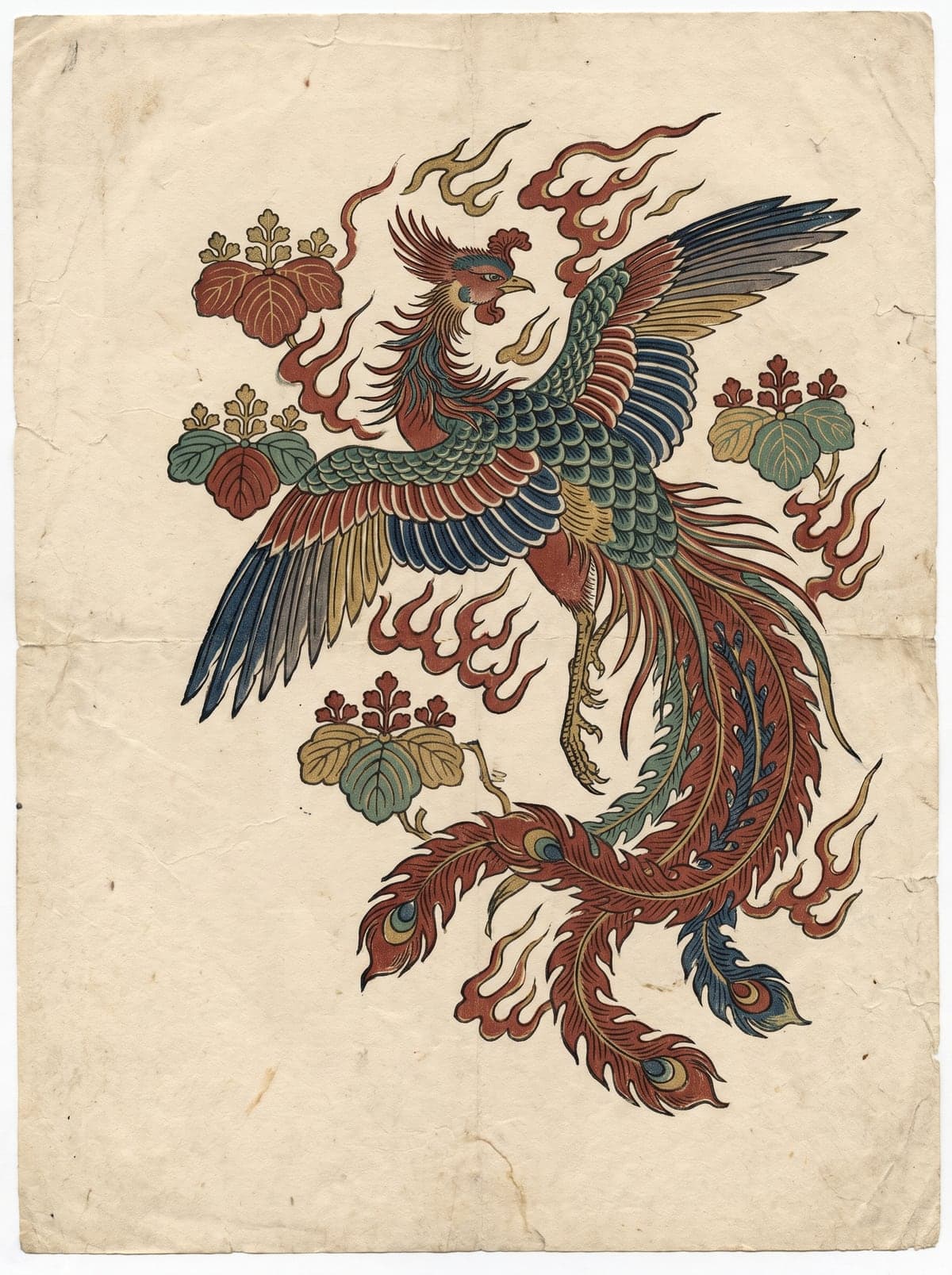
Phoenix (Hou-ou) — original Inkeify art plate in the ukiyo-e tradition.
Meaning & Symbolism
Rebirth, triumph, fidelity, the empress. Represents the union of yin and yang, and appears only in times of peace and prosperity.
The Story
The Hou-ou combines elements of several birds — the head of a pheasant, body of a mandarin duck, tail of a peacock, legs of a crane, beak of a parrot. It nests only in paulownia trees and drinks only from sweet springs.
How Artists Render It
The hou-ou is a palette piece — traditionally rendered in reds, oranges and golds with teal or green accents in the tail, the plumage built from layered bokashi so each feather group has its own gradient. Black-and-grey versions trade fire for elegance: the flowing tail becomes calligraphic linework with whip-shading, closer to a brush painting. Either way the tail feathers are where quality shows — they should taper and flow like silk in water, never like drawn spikes.
Traditional Placement
Back + GlutesFront Torso
Backpieces suit the phoenix best: wings spread across the shoulders, body down the spine, tail plumes sweeping into one buttock and thigh so the whole back moves when the wearer does. On a front-torso composition the bird descends across the chest with tail feathers wrapping the ribs. It pairs naturally with a dragon on the opposite side of the body — the classic yin-yang pairing — and wants open space: crowd it with too many secondary motifs and the tail loses its sweep.
Direction: Typically shown in flight with wings spread, tail feathers flowing downward in elaborate plumes.