Gobusode — the half-length suit 五分袖
Gobusode (五分袖, "half sleeve") is the half-length format of the Japanese bodysuit: coverage stops above the elbow and above the knee. It is the classic 'T-shirt and shorts' suit — a complete, planned horimono composition that disappears entirely in everyday summer clothing.
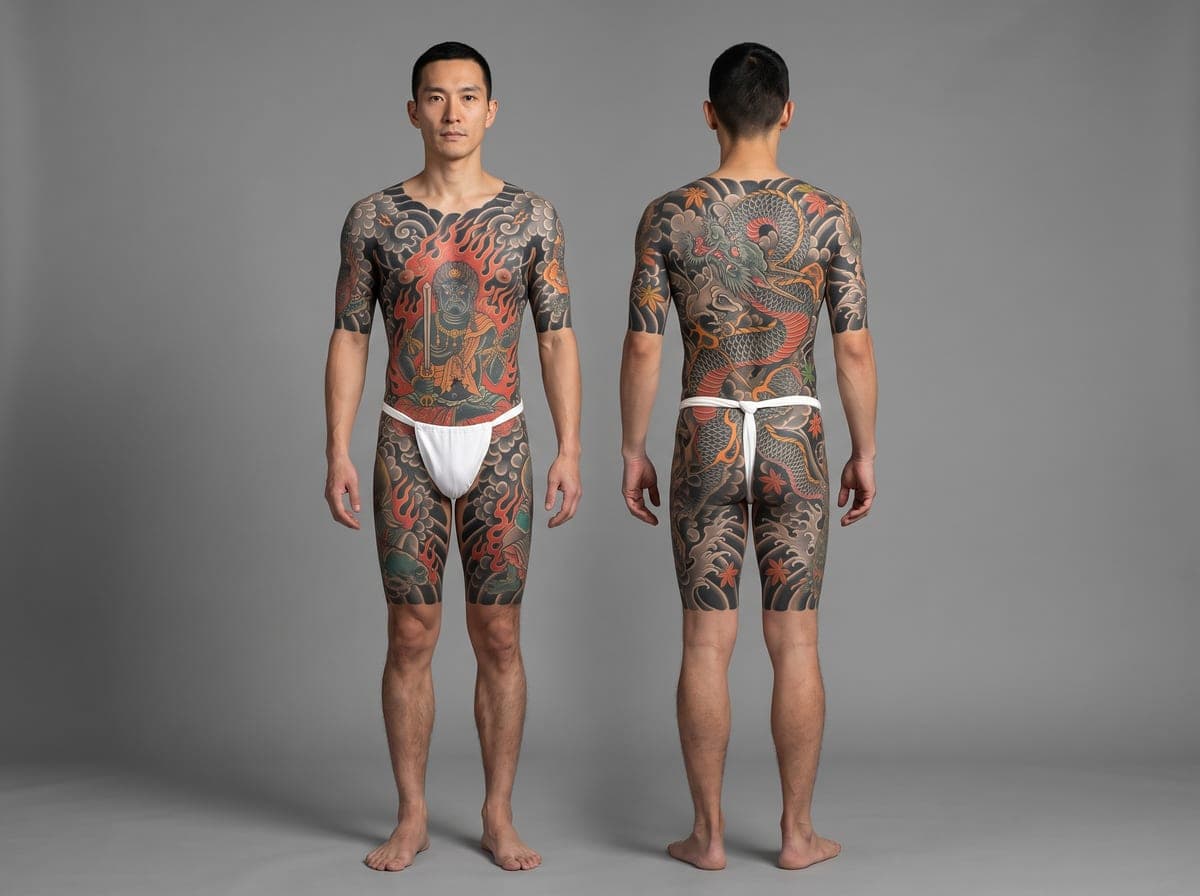
Coverage and cuts
A gobusode suit keeps the full architecture of a bodysuit — the back piece, the chest treatment, the gakubori background — and simply ends its sleeves and legs at the half mark with a clean mikiri border. Like every length format it takes either front cut: gobusode donburi (full front) or gobusode munewari (split front), the latter being the most concealable of all standard formats.
Gobusode vs shichibu
Shichibu (七分, seven-tenths) runs a few inches below the elbow and knee, where gobusode stops above them. The practical difference is exactly one garment: shichibu shows under a T-shirt and standard shorts; gobusode doesn't. Choosing between them is mostly a concealment decision — the composition inside the border is the same discipline.
Why people choose the half suit
Not as a compromise. Gobusode has its own long history among people whose work or world requires bare-armed invisibility, and its shorter canvas concentrates the composition — the back and torso carry the suit, and the mikiri edges become a deliberate design feature. A previewed gobusode on your own frame makes the coverage decision concrete: you see exactly where it ends before anything is permanent.
Frequently asked
What does gobusode mean?
五分袖 means "five-tenths sleeve" — half length. Sleeves end above the elbow, legs above the knee.
Is a gobusode suit cheaper or faster than a full suit?
It covers meaningfully less skin, so it is a shorter project — but it is still a multi-year, planned composition, not a shortcut.
Can a gobusode be extended to shichibu or soushinbori later?
Yes, if the original composition anticipated it — which is why the mikiri borders and background flow should be planned with the endgame in mind.
Keep reading
See it on your own body first
Pick a format and motifs, then generate photorealistic previews of the complete suit — free to start.
Try it free