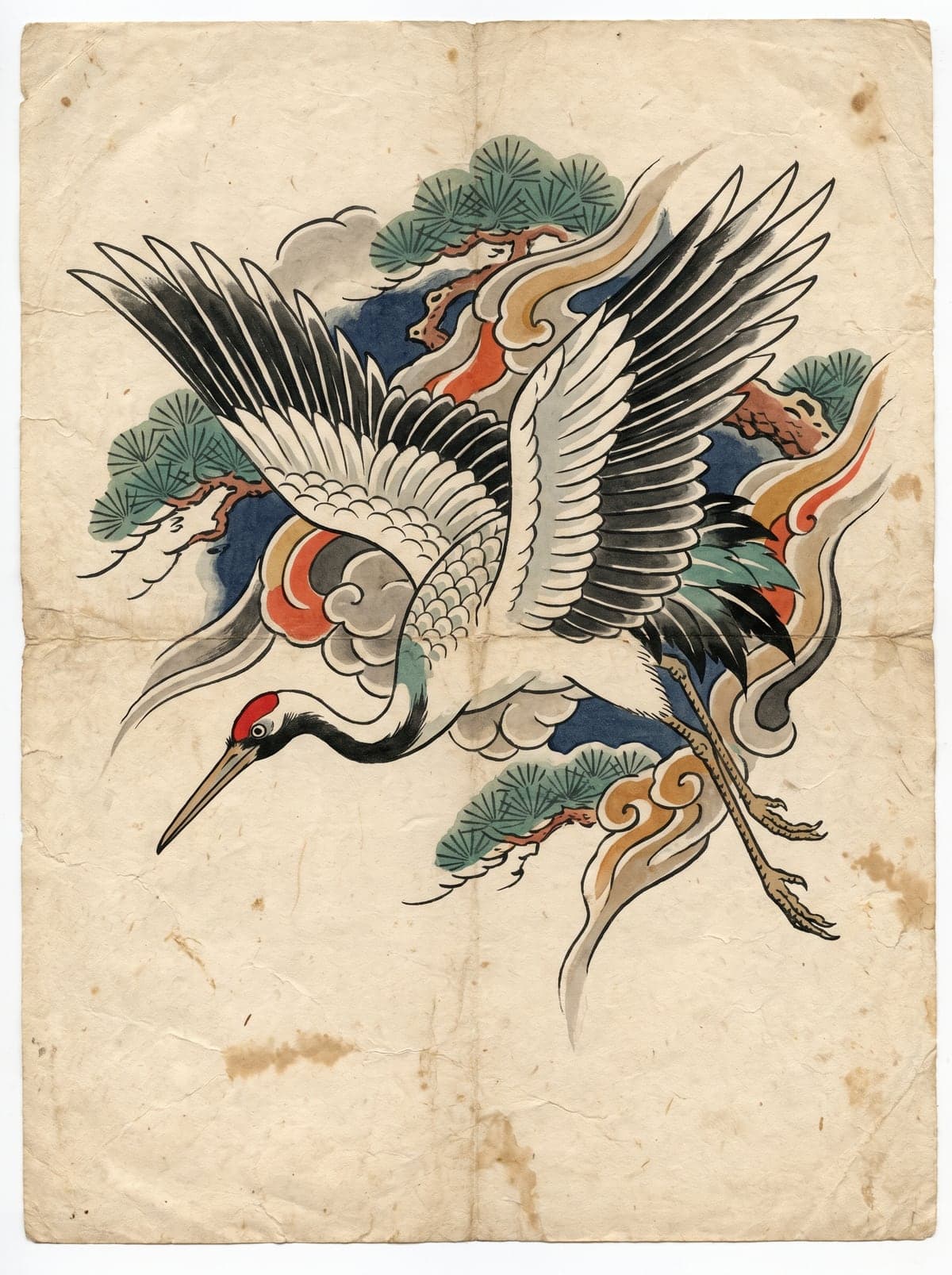
Crane (Tsuru) — original Inkeify art plate in the ukiyo-e tradition.
Meaning & Symbolism
Longevity, good fortune, fidelity. Cranes are said to live 1,000 years. They mate for life and symbolize marital devotion.
The Story
The crane is one of the most auspicious creatures in Japanese culture. The legend of Tsuru no Ongaeshi (Crane's Return of Favor) tells of a crane who transforms into a woman to repay a kindness. Senbazuru — folding 1,000 paper cranes — is believed to grant a wish.
How Artists Render It
The tsuru is a minimalist's motif in a maximalist tradition: white body, black flight feathers, red crown — three values that demand clean execution because there's nowhere to hide. Colour treatments keep the palette exactly there and let a gold sun or blue sky panel behind provide warmth. In black-and-grey the crane becomes brush calligraphy: long neck and legs in confident single lines, feather groups in flat black. Negative space (bare skin as the white body) is a particularly elegant treatment.
Traditional Placement
Back + GlutesFront Torso
Cranes in flight suit the back's upper third, shoulder blades, and the outer upper arm — places where the wingspan can open horizontally. A standing crane fits tall narrow spaces: the outer calf, the ribs' vertical line. They pair with pine, sun disks, clouds and turtles (the longevity pairing) and read best with generous empty space around them; the crane's elegance dies in crowded compositions. Two cranes flying together is a marriage emblem and a lovely paired-placement across two sides of the body.
Direction: Shown in flight with wings spread, or standing elegantly in water.