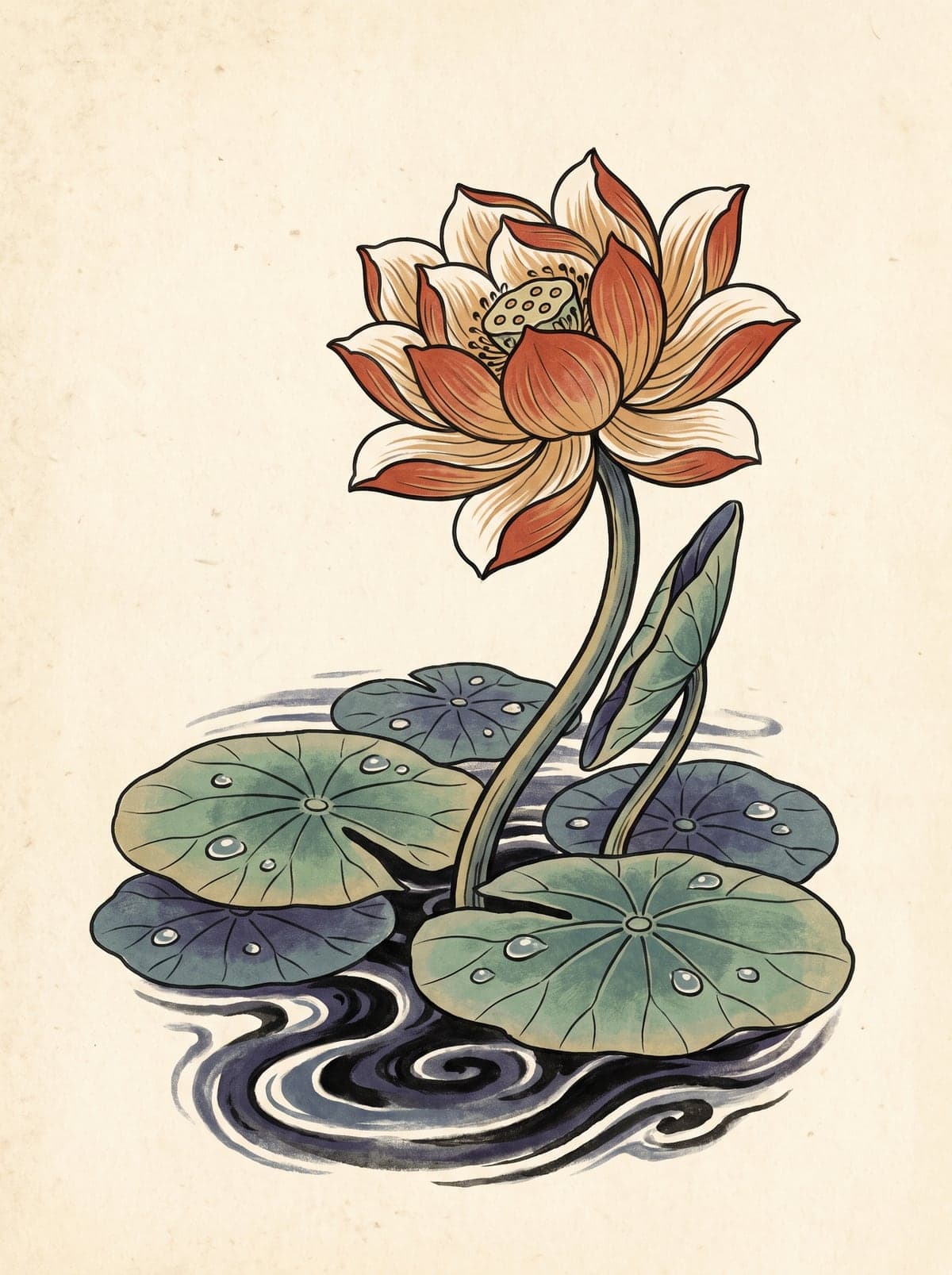
Lotus (Hasu / Renge) — original Inkeify art plate in the ukiyo-e tradition.
Meaning & Symbolism
Purity, spiritual awakening, triumph over adversity. The lotus grows from mud but blooms immaculately above the water — representing the soul's journey from ignorance to enlightenment.
The Story
Central to Buddhism — the Buddha is often depicted seated on a lotus throne. The lotus represents the stages of enlightenment: closed bud (potential), opening flower (progress), full bloom (enlightenment). Each color carries meaning: white (purity), pink (the Buddha), blue (wisdom), red (compassion).
How Artists Render It
The lotus renders with an intentional serenity: cupped petals in whites, pinks or blue-tinged gradients rising over broad flat pads, often with the bud and full bloom shown together (the Buddhist past-and-future device). Petal shading runs base-dark to tip-light, opposite the sakura convention. Black-and-grey lotus lean on the pad's flat tone against the bloom's gradient. Muddy water beneath is iconographically important — purity rising from mud is the entire symbol, so clean-room lotus miss the point.
Traditional Placement
Back + GlutesFront Torso
Lotus anchor water compositions from below: at the wrist-end of a koi sleeve, the base of a back panel, above the ankle on a water leg. They partner Buddhist figures constitutionally — beneath Kannon, under a meditating figure, cupping a sacred jewel. A lotus centred on the sternum or between the shoulder blades gives a bodysuit a devotional axis. Because it reads calm, it's the flower artists reach for to cool a composition that peony would heat.