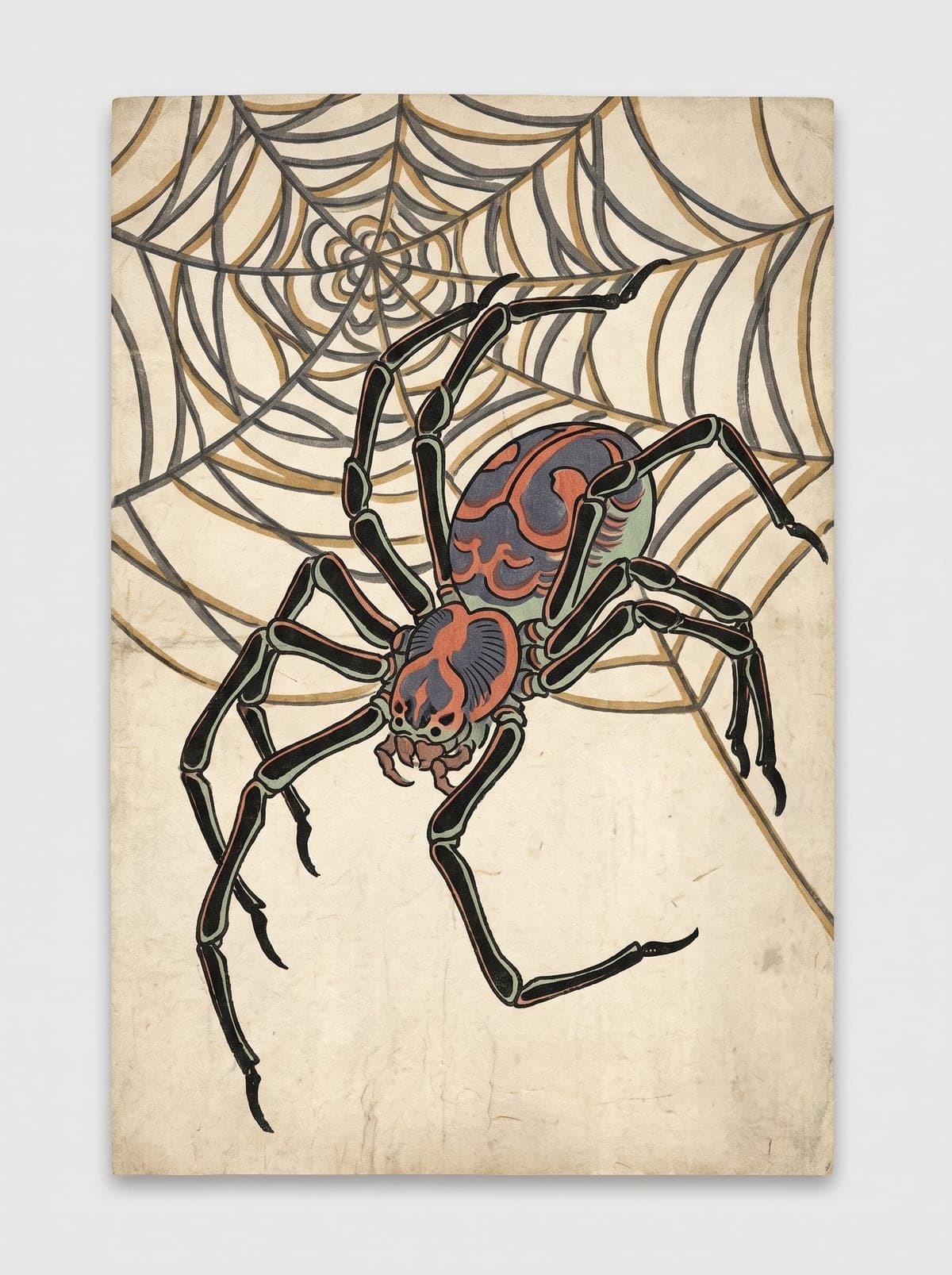
Spider (Kumo) — original Inkeify art plate in the ukiyo-e tradition.
Meaning & Symbolism
Industry, patience, entrapment. In some traditions, spiders are tricksters or shapeshifters (jorōgumo — a spider that transforms into a seductive woman).
The Story
The Tsuchigumo (earth spider) is a yōkai from the Heike Monogatari that the warrior Minamoto no Yorimitsu battled. Jorōgumo stories tell of a 400-year-old spider that takes the form of a beautiful woman to lure victims.
How Artists Render It
The kumo — usually the jorōgumo myth's golden orb-weaver — pairs a jewel-like body with architectural web work. Colour treatments make the abdomen the gem: yellow-and-black banding or deep red with gold. The web is line-craft: fine, slightly sagging silk lines with dew if the artist is showing off. Black-and-grey versions push the web to near-geometric abstraction with the spider as its dark focal point. Crisp web lines over textured skin areas are demanding — an experienced-artist motif.
Traditional Placement
Front Torso
Webs love anatomical hollows: the elbow's crook, the shoulder's front hollow, the knee's back — anywhere the web can fan from a natural anchor point. The spider itself sits at the web's edge, not its centre, as if just arrived. As a jorōgumo narrative piece (the seductress-spider), it grows to a thigh or rib panel with a woman's figure integrated. It carries an outlaw edge in older iconography, which some wearers want and some should know about before choosing it.