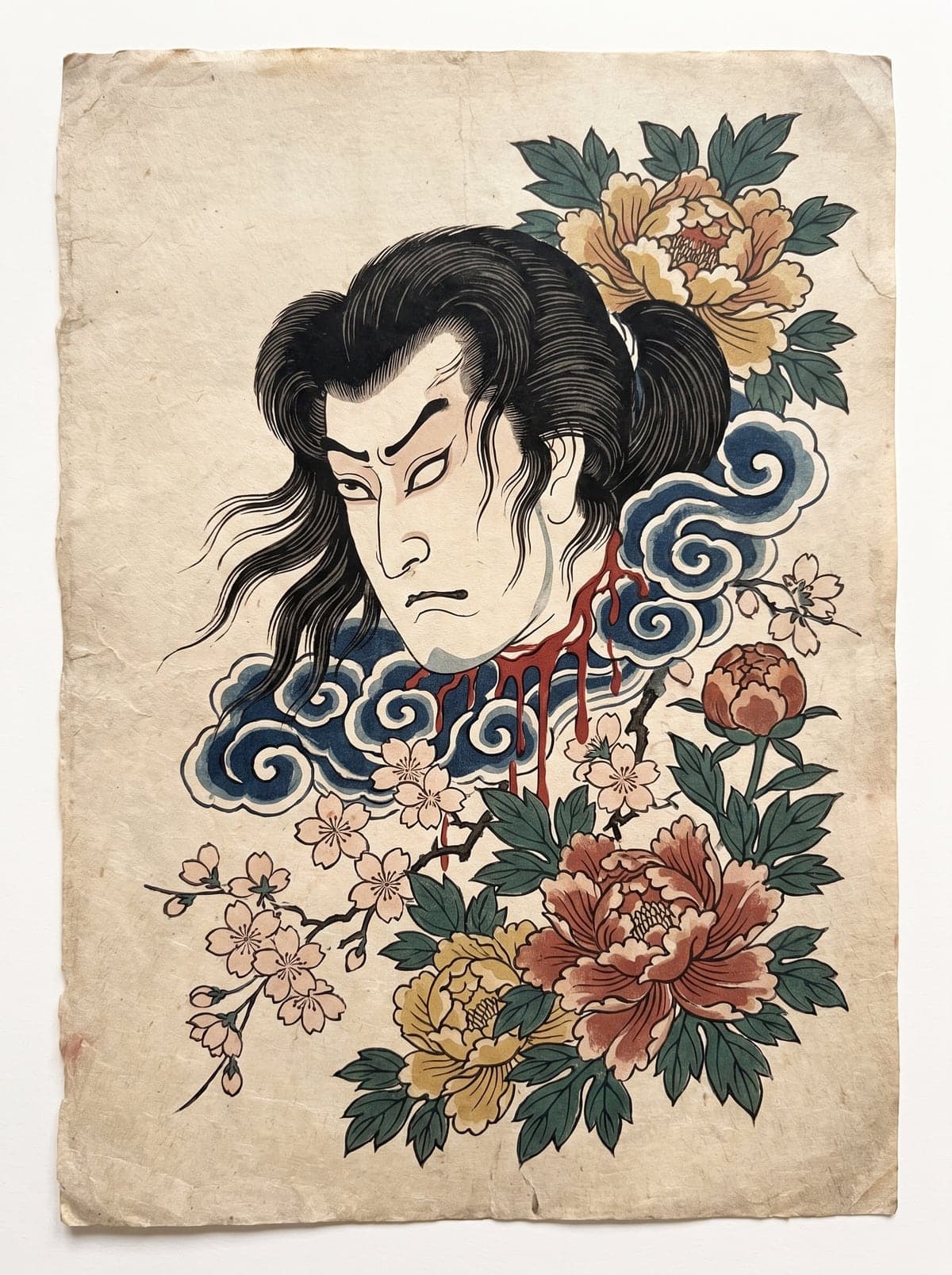
Severed Head (Namakubi) — original Inkeify art plate in the ukiyo-e tradition.
Meaning & Symbolism
Respect for one's enemy, acceptance of death, impermanence, the warrior's readiness to face death. Not macabre — represents the samurai acceptance that death is always present.
The Story
In samurai culture, taking and presenting an enemy's head was a formal ritual acknowledging a worthy foe. The head was washed, the hair combed, and it was presented respectfully. In tattoo art, namakubi represents courage to face death and respect for the cycle of life.
How Artists Render It
The severed head is the tradition's rawest motif: a freshly cut samurai head, eyes half-lidded or defiant, blood rendered in stylised red ribbons rather than gore realism — that stylisation is what keeps it inside the tradition's aesthetic rather than shock art. Rope, a blade, or a hair-grip present the head. Black-and-grey treatments trade the red ribbons for deep black pooling, leaning entirely on the face's expression. The face must hold dignity; a screaming head misses the point of accepted fate.
Traditional Placement
Front Torso
Namakubi traditionally occupy ribs, thighs and forearm undersides — semi-private zones — reflecting their memento-mori intimacy. They scale well as mid-size pieces among larger motifs, often beneath a samurai figure as the battle's consequence, or paired with cherry blossom in the tradition's bluntest statement of life's brevity. This motif reads as an acceptance of mortality and consequence, not violence worship — but wearers should know the public reads it more literally than the tradition does.
Generate AI tattoo designs featuring Severed Head in seconds — irezumi, blackout, or blackwork. Plan your full bodysuit with stage-by-stage AI guidance.