Gakubori — the background that makes it a suit 額彫り
Gakubori (額彫り, "frame carving") is the background layer of Japanese tattooing: the waves, clouds, wind bars, rocks and maple-or-cherry drift that fill the space around the main motifs. It is what turns a collection of images into a single composition — without gakubori you have tattoos; with it you have a suit.
The vocabulary of the frame
The background forms are a fixed grammar: nami (waves) and their whitecaps, kumo (clouds), kaze or wind bars — the hard horizontal black bands — plus rocks, and seasonal drift like maple leaves or cherry petals that tie a suit to a season. Each main motif has customary pairings: dragons ride clouds, koi climb water, tigers move through wind and bamboo.
Rules that make it read as one piece
Good gakubori follows the body: background flows in consistent directions across shoulders, around the ribs and down the limbs, so the eye travels the suit without stopping at a seam. The mikiri — the deliberate border where tattoo ends and skin begins — is part of the background's job, giving even a half-length suit a finished, intentional edge rather than a fade-out.
Why background is the hard part to plan
Motifs are chosen; background is composed. When a suit is built over years and multiple stages, keeping the gakubori consistent — same water, same wind, same darkness — is the difference between a bodysuit and a patchwork. It is the single strongest argument for previewing the complete suit before starting: you see the background logic whole, not one panel at a time.
The background elements
Five forms make up almost every irezumi background. Each has its own conventions — and its own page with meaning, story and pairing rules.
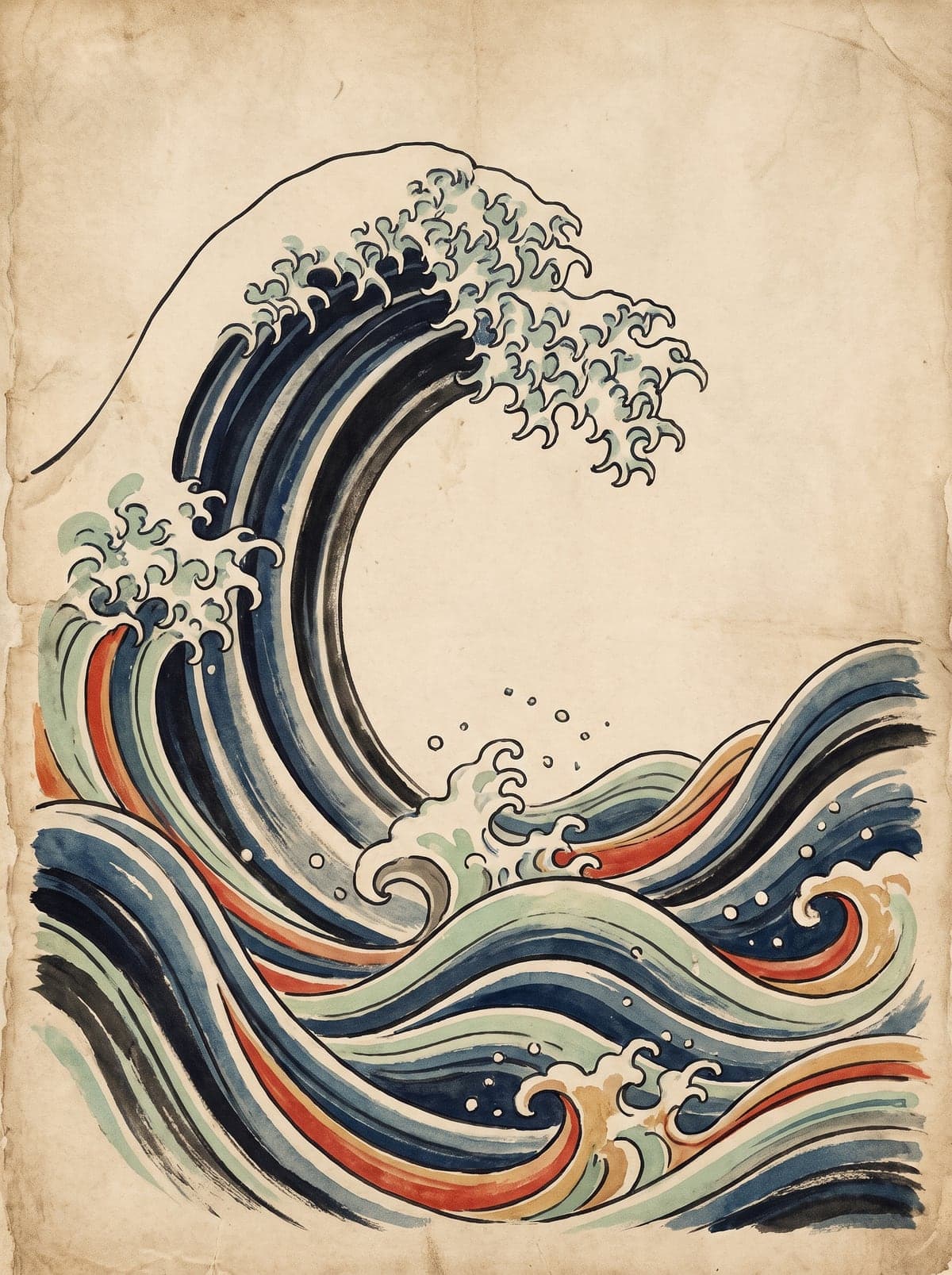
Waves Nami
Power, life force, and constant change.
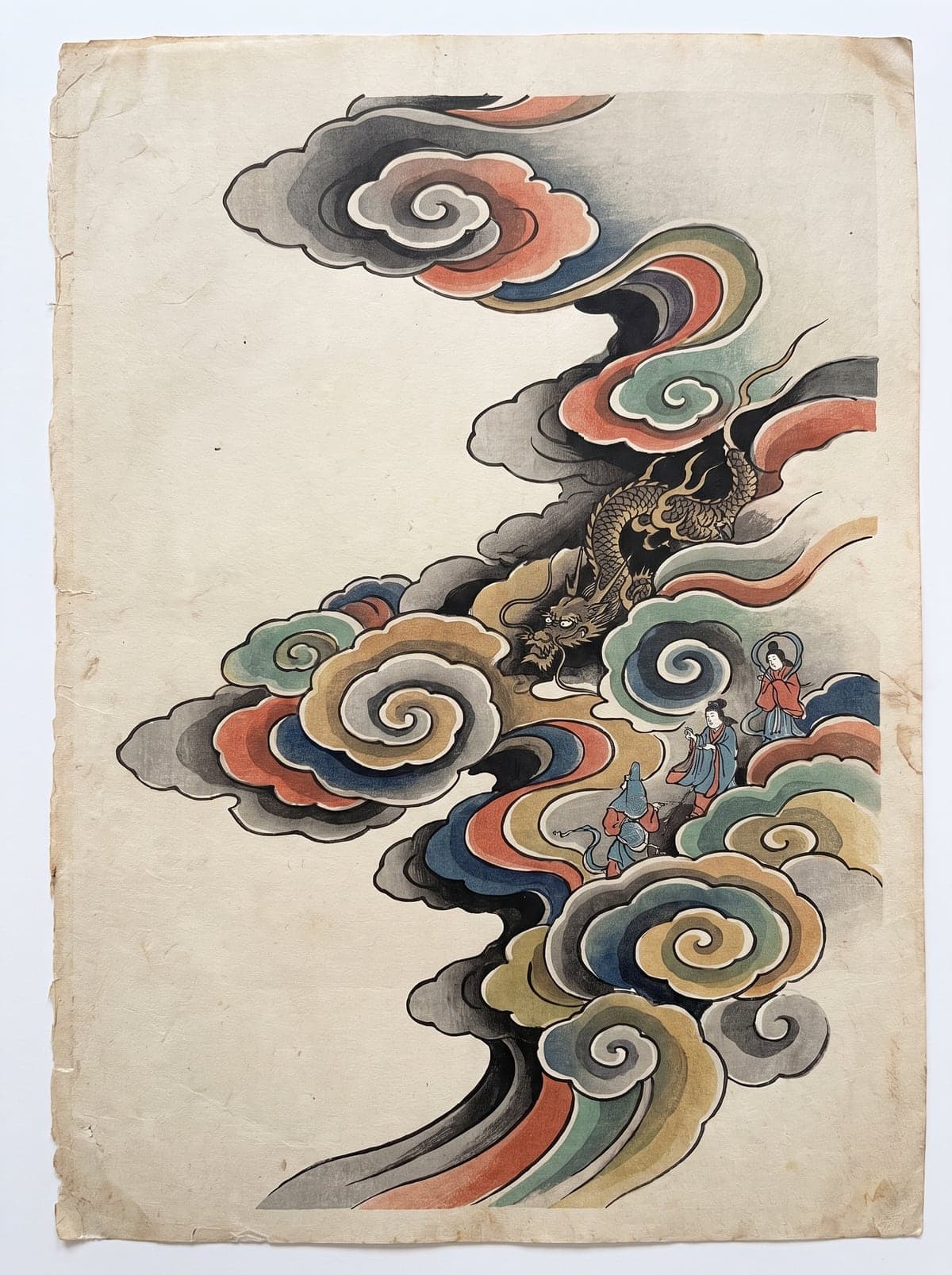
Clouds Kumo
Heaven, the divine realm, and transition.
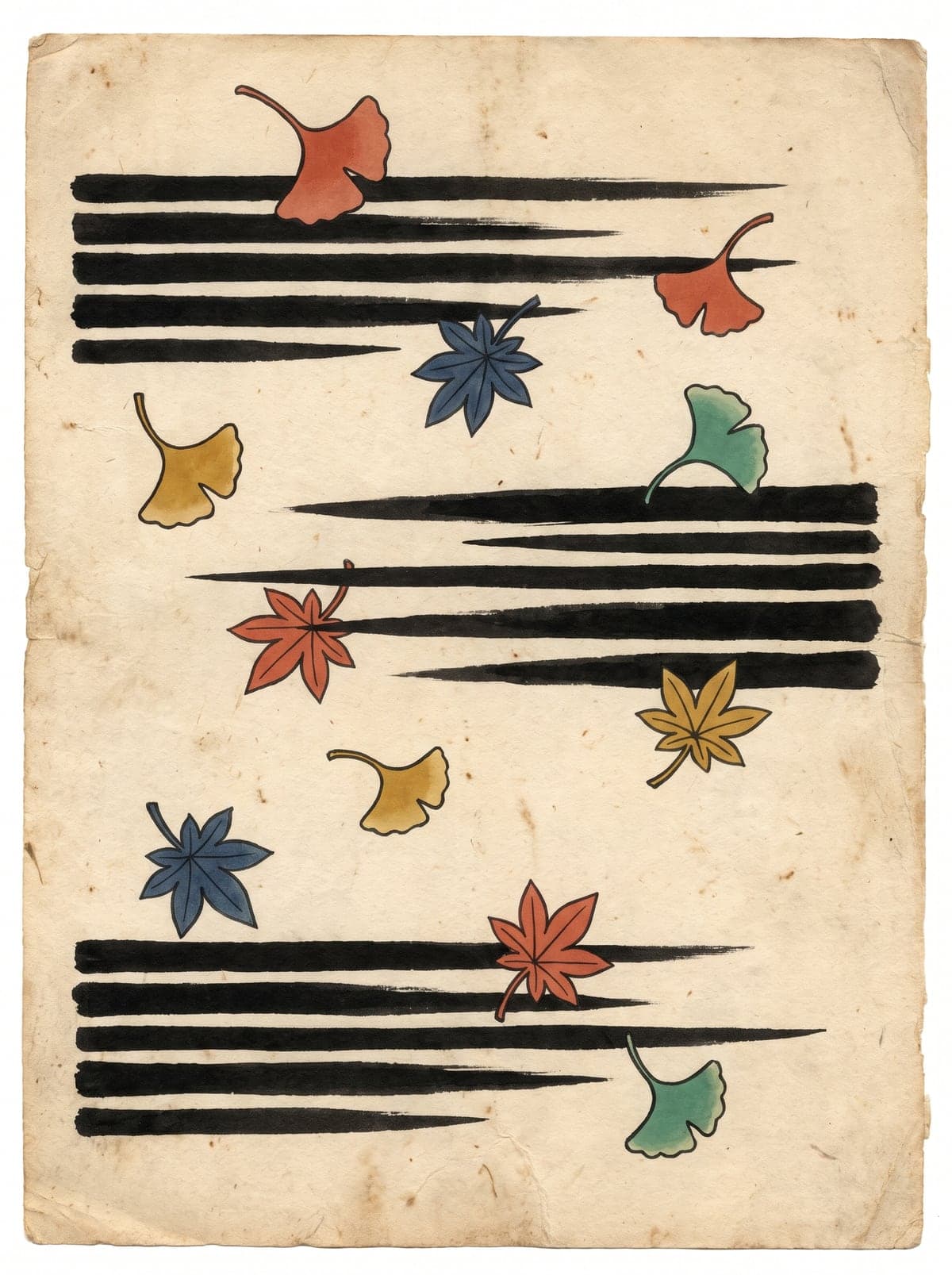
Wind Bars Kaze
The breath of the composition — invisible force made visible.
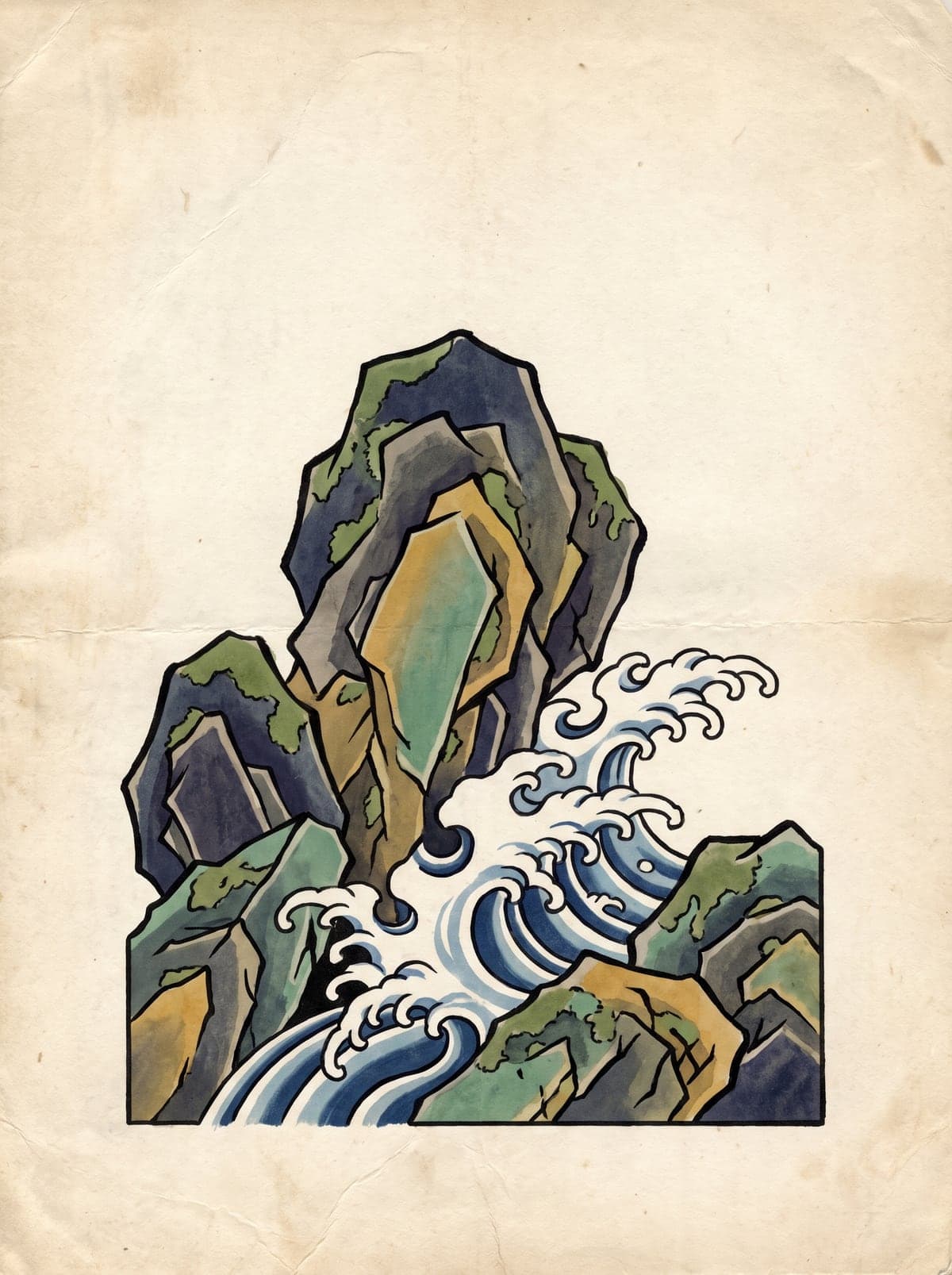
Rocks Iwa
Steadfastness and permanence — the unmoving anchor the moving elements break against.
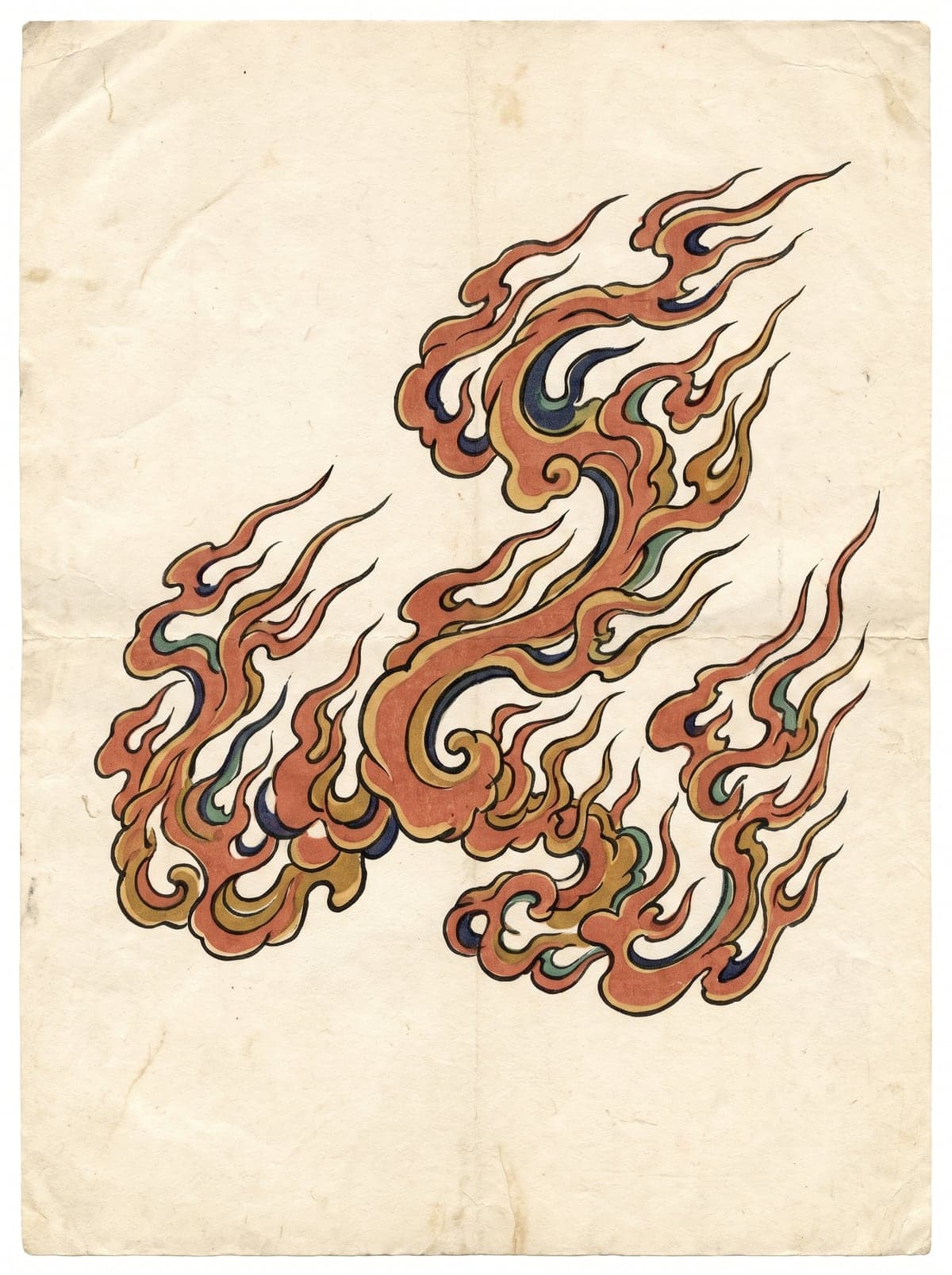
Fire Honō
Purification, transformation, and wrath.
Frequently asked
What's the difference between gakubori and nukibori?
They're opposites. Gakubori surrounds motifs with a composed background; nukibori (抜き彫り) places the motif alone on bare skin with no background at all.
Does blackout tattooing use gakubori?
Blackout replaces the background question entirely — the solid black is the field and the design lives in negative space. Irezumi-blackout hybrids exist, using blackout-density fields as an aggressive modern gakubori.
Is the background done before or after the main motifs?
The outline of everything usually comes first (sujibori), then shading and colour proceed area by area — the background is planned from the start, not added at the end.
Keep reading
See it on your own body first
Pick a format and motifs, then generate photorealistic previews of the complete suit — free to start.
Try it free